

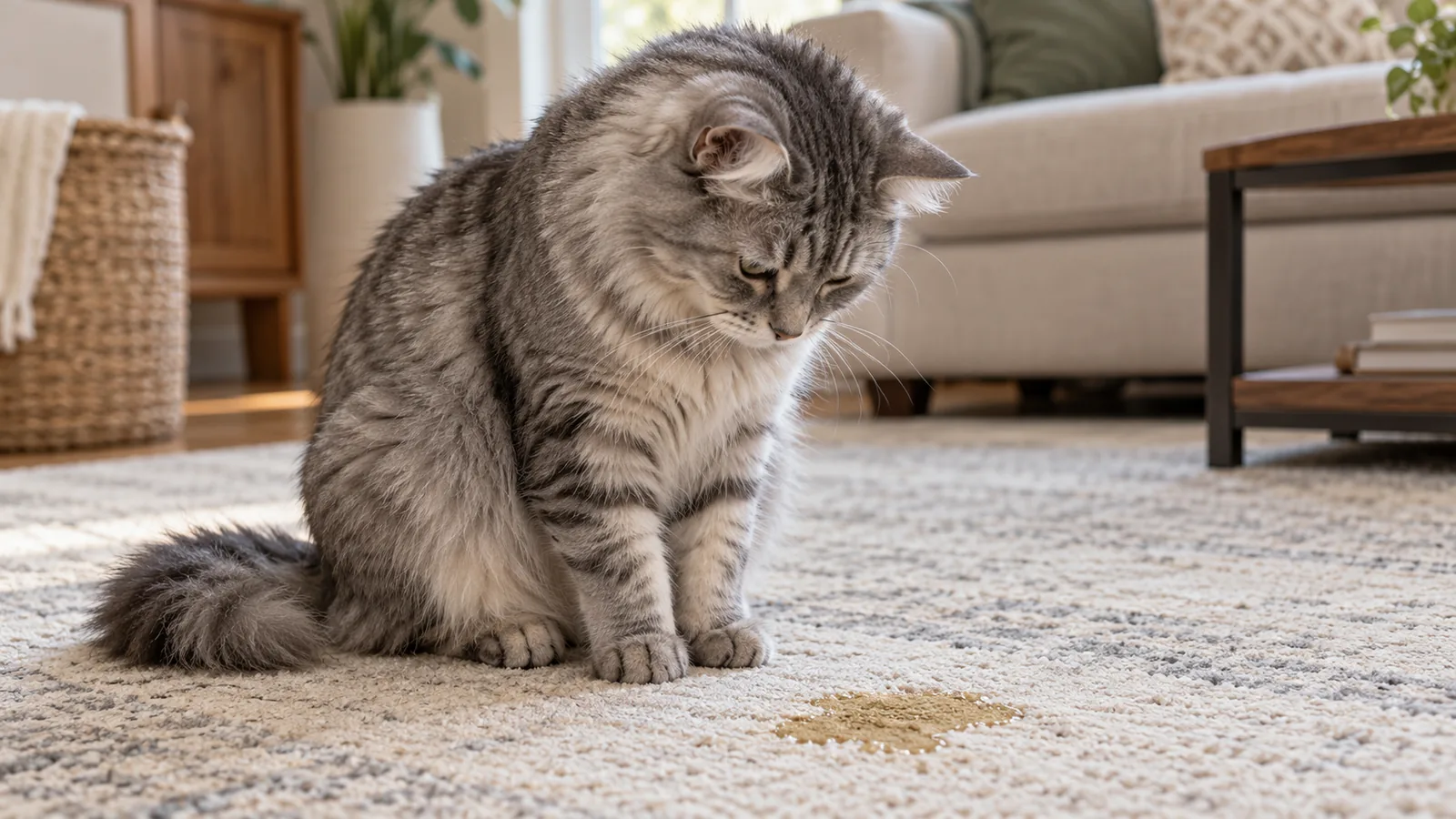
If you've been reaching for the paper towels every few days for a month, you're not imagining a pattern. Vomiting that keeps returning over weeks is called chronic vomiting, and it's rarely just a sensitive stomach. The usual causes are a food reaction, a partly swallowed object, inflammation in the gut lining, or a disease in another organ, such as the kidneys, liver, thyroid, or pancreas, that brings nausea with it. Most of these are very manageable once they have a name, and finding that name usually takes a few rounds of testing rather than one visit.
Liberty Veterinary Hospital in Liberty Twp has the tools to work a vomiting case all the way through under one roof, from our on-site lab and digital X-rays to a diet trial to ultrasound and endoscopy when the early answers don't add up. We've been AAHA-accredited since 2000, and that standard shows in how we find the cause of your pet’s symptoms. It's fair to be tired of the cleanup and one more food switch, and we'll walk you through every step and what each result means. If this has gone on for weeks, start looking for answers with us.
Chronic Vomiting in 4 Points
- Vomiting that keeps coming back over weeks, especially with weight loss or a shifting appetite, is a pattern worth testing.
- The common causes are diet, swallowed objects, inflammatory bowel disease, and organ problems like kidney or thyroid disease, and occasionally two of these overlap.
- The workup moves in steps: history and exam, bloodwork and urine testing, imaging, a strict diet trial, then endoscopy or biopsy when the answer still isn't clear.
- Blood in the vomit, a swollen or painful belly, retching that brings nothing up, or water that comes straight back up means a same-day visit, not a wait.
What Causes Chronic Vomiting in Dogs and Cats?
Chronic vomiting usually starts in one of two places. Either something is wrong inside the stomach and intestines, such as a food reaction, a swallowed object, or inflammatory bowel disease, or a disease in another organ is causing nausea. These conditions look alike from the outside but are treated completely differently, which is why testing matters.
Could Food Be Behind the Vomiting?
A food allergy is an immune reaction to a protein, and a food intolerance upsets digestion without the immune system taking part. The two look identical from the kitchen floor, and changing brands every few weeks makes the trigger harder to find. Choosing the right food comes down to life stage, body condition, and medical history, not the words on the front of the bag. Terms like holistic and premium carry no regulated definition.
Could My Pet Have Swallowed Something?
A swallowed foreign body like a sock, a string, or a chewed-off piece of toy can cause a partial blockage. Liquid slips past while food backs up, so you see weeks of on-and-off vomiting instead of the sudden emergency many families picture. Dogs raid trash cans and countertops, and cats swallow string and tinsel more often than you'd expect. When imaging shows an object stuck where it shouldn't be, our doctors remove it surgically right here.
Could It Be Inflammatory Bowel Disease or Cancer?
In inflammatory bowel disease, the lining of the stomach or intestines fills with inflammatory cells. It's diagnosed by ruling out other causes and confirming it on a biopsy, not from the signs alone.
In cats, the gut cancer we see most often is intestinal lymphoma, which can look nearly identical to inflammation on ultrasound. The low-grade form can often be managed for a long time with oral medication once it's correctly identified. Stomach cancer is less common, more often seen in older dogs, and brings vomiting, weight loss, and sometimes digested blood.
###
What Other Stomach Problems Cause Repeat Vomiting?
| Condition | What it looks like | What helps |
| Stomach ulcers (sores in the stomach lining) | Belly pain, a dropping appetite, and vomit that looks like coffee grounds, often after long courses of anti-inflammatory medication or a serious illness | Treating the cause plus medication to protect and heal the stomach lining |
| Bilious vomiting syndrome | Yellow bile brought up on an empty stomach, usually first thing in the morning | A late-evening snack or smaller, more frequent meals |
| Pyloric stenosis (a narrowed stomach exit) | Food that backs up and comes up hours after a meal | Diagnosis with imaging, and sometimes surgery to widen the opening |
Which Diseases Outside the Gut Bring Nausea With Them?
- Kidneys: Chronic kidney disease often causes stomach signs first, as waste the kidneys can no longer clear builds up in the bloodstream and brings nausea, a shrinking appetite, and steady weight loss.
- Liver and gallbladder: Inflammation in the liver or a problem in the bile ducts can cause on-and-off vomiting and a fading appetite, and some pets develop a yellow tint to the gums or the whites of the eyes.
- Thyroid: An overactive thyroid speeds an older cat up, so vomiting arrives with weight loss despite a big appetite, restlessness, and a fast heart rate.
- Pancreas: Pancreatitis, inflammation of the pancreas, brings vomiting and belly pain, sometimes after a fatty meal in dogs, and is harder to spot in cats.
Anti-nausea medication can quiet any of these for a few days, but the vomiting comes back until the disease behind it is treated.
Can Two Problems Cause Vomiting at the Same Time?
Yes, and it's one reason vomiting sometimes continues after treatment starts. A cat being treated for inflammatory bowel disease can keep vomiting because an overactive thyroid hasn't been found yet, and a dog with a food-sensitive stomach can also be in the early stages of kidney disease. If your pet improves only partway, we keep looking rather than stopping at the first answer.
What Happens at the Vet When Vomiting Has Gone On for Weeks?
The first visit starts with questions and an exam rather than equipment. We take a detailed history, feel the abdomen, and compare today's weight against earlier visits, then move to baseline testing of blood, urine, stool, and imaging.
What Should You Track Before the Appointment?
Write it down for a week if you can: when it happens, how many times, how soon after a meal, and whether your pet eats again afterward. Photos help, since the types of vomit sort into a few patterns. Yellow or green fluid is bile on an empty stomach. Food that comes back barely changed points toward regurgitation rather than true vomiting. Material that looks like coffee grounds is blood that was digested before it came up, and bright red is blood from something bleeding right now. Foamy white liquid also comes up on an empty stomach, and in cats it can be the tail end of a hairball.
What Are the Baseline Tests Looking For?
- Blood and urine: Bloodwork checks kidney and liver values, blood sugar, protein, and thyroid levels in older cats. A urinalysis runs alongside it, since urine concentration, protein, and sediment can flag early kidney disease or a urinary infection while blood values still read as normal.
- Stool testing: Parasites are quick to rule out and easy to overlook, and one clean sample doesn't always mean a pet isn't carrying them.
- Imaging: An X-ray outlines the stomach and intestines and can catch swallowed material or a gas pattern that suggests a blockage, sometimes with barium to track how food moves through. Our ultrasound looks at the intestinal wall itself, the pancreas, and the lymph nodes behind the stomach.
If your pet has had wellness bloodwork in healthy years, a kidney value that is still technically normal but has crept up since the last panel points us somewhere a one-time result never could.
How Soon Should a Vomiting Pet Be Seen?
Vomiting that has repeated over several weeks is reason enough for an appointment, and so is vomiting paired with weight loss, more drinking and urinating, lower energy, or on-and-off diarrhea. Senior pets should come in sooner, since the organ diseases of age often cause vomiting before anything else shows.
An occasional hairball is part of living with a cat, but hairballs more often than once a month, or retching that produces nothing at all, belong in an exam room.
Weight loss is often noticed last. A pound off a ten-pound cat is a tenth of their body, and it usually means the vomiting has been costing something for a while. If your pet is losing weight, book this week and bring your notes.
Which Signs Mean Your Pet Needs to Be Seen Today?
Call us first if any of the signs below show up during our open hours, and we'll tell you whether to come straight in. After hours, a doctor is on call and can tell you whether your pet should go directly to a 24/7 emergency hospital in the Cincinnati area.
| What You're Seeing | Why It Can't Wait |
| Blood in the vomit, fresh or coffee-ground | Bleeding in the stomach or upper intestine |
| A belly that looks swollen or hurts to touch | Possible blockage, bloat, or an organ emergency |
| Retching with nothing coming up | In a deep-chested dog this can be bloat, where minutes matter |
| Water coming back up within minutes | Dehydration builds fast with nothing staying down |
| Severe lethargy, or a puppy or kitten vomiting repeatedly | The very young and the very old crash faster |
Never give your pet your own pain relievers or anti-nausea pills, and never make your pet vomit at home unless we've told you to, since forcing a swallowed sock back up can lodge it somewhere worse.
Where Do Fast Eating and Household Stress Fit In?
Fast eating and stress can each cause vomiting on their own, and both get missed because neither shows on bloodwork. A pet who empties the bowl in seconds may bring food back up nearly whole a few minutes later, and chronic stress drives real digestive upset, especially in cats. Either one can also sit alongside a disease, so we don't stop there without checking.
Gulping meals turns up most often in multi-pet households and in pets who once had to compete for food. Feed competing pets in separate rooms, give smaller portions more often, and use interactive feeders or slow bowls to stretch a thirty-second meal into several minutes of work.
In cats, stress-driven vomiting often follows a change the household barely registered: a new baby, a visiting dog, construction next door, or a litter box that moved. Hiding, overgrooming, and a cat who stops joining the family in the evening come with it. Stress and anxiety in dogs show up in smaller signals: lip licking, yawning when nobody is tired, pacing, and following one person from room to room.
How Does a Food Trial Work?
A diet trial is a diagnostic test, not a food swap. Your pet eats one prescription novel-protein or hydrolyzed food, and nothing else, for six to eight weeks, then goes back to the old diet on purpose to confirm the reaction.
Novel protein means a meat your pet has no history with, often rabbit or venison, so the immune system has nothing familiar to react to. Hydrolyzed means a common protein broken into pieces too small to trigger that response.
Compliance is the whole test. A single flavored heartworm chew, or a mouthful stolen from the other pet's dish, resets the clock, and eight weeks tells you nothing. Limited-ingredient foods off the store shelf don't work as substitutes either, since the same equipment runs multiple recipes and traces of other proteins come along for the ride.
What Do Endoscopy and Biopsy Show That Other Tests Miss?
Imaging shows shape, thickness, and movement. Tissue shows what the cells are doing, which is the only way to separate inflammation from cancer and from an infection in the wall of the gut. Those three overlap almost entirely on signs and not at all on how they're managed, so what the lab reads off the tissue sets the plan.
What Happens When We Scope Your Pet's Stomach?
Your pet is under anesthesia for an endoscopy, and a thin flexible camera travels down the esophagus so we can look at the lining of the stomach and upper intestine directly and take samples without opening the abdomen. We perform endoscopy here, and because nothing is cut, recovery is usually quick. A pre-anesthetic evaluation comes first, so your pet gets an anesthesia plan built around their own lab results rather than a standard protocol.
Would Your Pet Need Surgery Rather Than a Scope?
A scope only reaches the surface layers, so disease sitting deeper in the intestinal wall can be missed by endoscopy and found by a surgical biopsy. Exploratory surgery means opening the abdomen to examine the organs directly, with biopsies taken through the whole wall at several spots along the intestine, followed by roughly two weeks of restricted activity. It makes sense when imaging has already found something, when the diagnosis depends on full-thickness tissue, or when a blockage or mass needs removing in the same procedure. The doctors who perform abdominal surgery here will tell you which approach fits your pet, and the ultrasound findings are usually what decide whether a boarded surgeon should take it from there.
How Is Chronic Vomiting Treated Once the Cause Has a Name?
Treatment follows the diagnosis rather than the symptom, and three different answers come out of the workup. Many pets do well once what we're treating matches what the testing found, and the vomiting settles as the problem behind it comes under control.
| What the workup found | What management looks like |
| Food-responsive vomiting | Staying on the diet that worked, with the household following the same rules on treats and table food |
| Inflammatory bowel disease | Anti-inflammatory or immunosuppressive medication plus dietary adjustments |
| Kidney, thyroid, liver, or pancreatic disease | Treating the underlying condition, with vomiting usually easing as that stabilizes |
Food-responsive pets relapse for predictable reasons: Thanksgiving, a houseguest with biscuits, a quiet reformulation of the bag you've bought for two years, or a boarding stay where the diet changed.
Treatment for inflammatory bowel disease is adjusted over time rather than set once. The goal is the least medication that keeps your pet eating, holding weight, and keeping food down, so the doctors following your pet's response will revisit the dose over the months.
What Families Ask Before We Start Testing
How Do I Tell Vomiting From Food Coming Straight Back Up?
The two point at different organs, so the difference matters. Vomiting is active: nausea first, then drooling, abdominal heaving, and material that has been sitting in the stomach. Food that comes back up in a tube shape with little effort is regurgitation, which points toward the esophagus. Which one you're seeing changes the imaging we reach for.
Can We Try a Sensitive Stomach Food Before Any Testing?
Trying a sensitive stomach food first is reasonable, and it sometimes helps. The catch is that if your pet improves a little and then slides back, you won't know whether the diet was wrong or something else was driving it. Baseline bloodwork and urine testing first means a kidney or thyroid problem doesn't spend two more months being treated with kibble.
My Cat Vomits About Once a Week and Seems Fine. Is That Normal?
Weekly vomiting isn't normal, even in a cat who holds a steady weight and acts like themselves. Many cats in the early stretch of inflammatory bowel disease, an overactive thyroid, or kidney disease seem ordinary at home for months. An exam and baseline labs are a reasonable next step, and clean results give you something to compare against later.
Getting to the Bottom of Your Pet's Chronic Vomiting
Weeks of vomiting are wearing on everyone, but most causes can be found and managed with a steady, step-by-step workup. Richer food and extra hands under the table make the holidays a common time for a settled stomach to flare, so it's a good time to start. If the vomiting has gone on for weeks, book an appointment at Liberty Veterinary Hospital in Liberty Twp, bring your notes and photos, and we'll keep working the case until the picture adds up.